Don’t Shoulder The Burden Of Shoulder Pain
If my channel analytics alone are anything to go by, a whole lot of you are struggling with shoulder pain. In fact, a deeper dive suggests that shoulder pain is the third most common musculoskeletal injury dealt with by physiotherapists. When the shoulder stops working as we are used to, many everyday tasks can turn into an elongated nightmare, and yet despite all this the options for treatment can be pretty slim.
In my time working with individuals with shoulder pain, I have found that almost every single person who walks through my door (or zoom chat in the case of my international clients) has been given exactly the same set of strengthening exercises to fix the problem. This would be great if it was working, but the fact that these people feel the need to seek out yet another expert suggests that banded pull-aparts and wall snow angels might not be the one-size-fits-all magic pill that some might claim them to be. So today I would like to share with you the most common tricks I have used to help ease shoulder pain.

Isolate The Joints
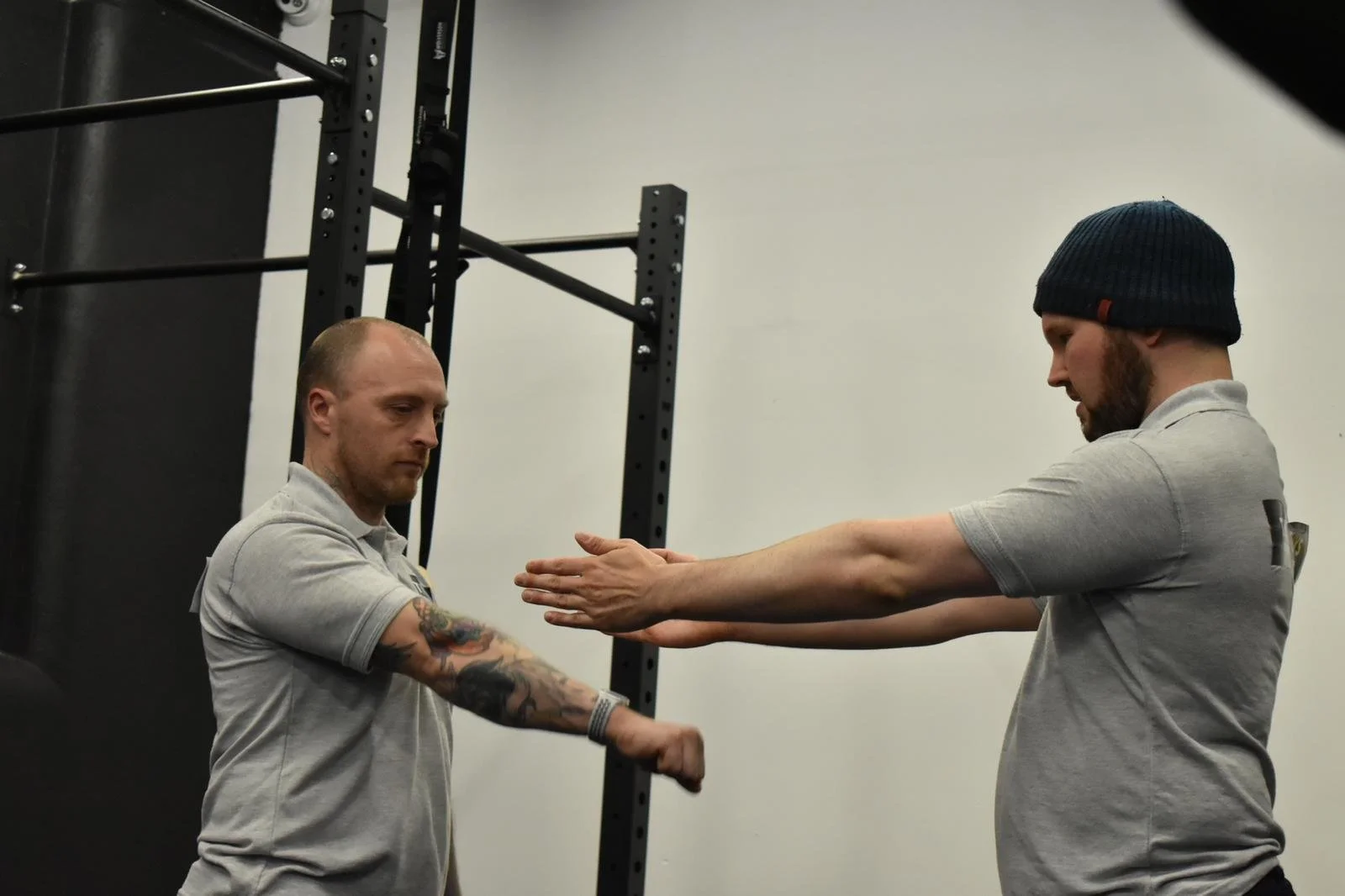
You may have worked on opening up the strength and range of movement of your shoulder, but have you looked at what else is happening all around it? The muscles connecting the shoulder and scapula to the rest of the arm and trunk are all interconnected with other joints, meaning moving your shoulder with a bent arm is completely different to moving your shoulder with a straight arm. One of the most common things I see from people who have spent a lot of time on shoulder rehab is that while the shoulder itself is moving better, the trunk, neck, elbow and hand are all moving too. If the shoulder depends on assistance from these other joints to move, this will turn out to be a problem if you ever want these joints to do anything other than your rehab exercises. Learning to move the shoulder in isolation of the other joints is a crucial step towards reducing pain and building back strength.
Look To The Neck
Here’s the strange thing about the body. Usually the problem and the solution are found in different areas. When it comes to the shoulder, it’s always a pretty safe bet that the neck will be part of the solution. The reason why boils down to stress. When our stress levels rise, the brain kicks into survival mode. One of the first things it will do is add some tension to the neck, as this protects the skull & brain from any unexpected blows or falls. As we saw in the previous point, muscles are connected, and most of the muscles connected to the neck at one point are connected to the shoulder at the other. So tension in the neck automatically changes the movement of the shoulder, and if we just focus on shoulder rehab we might only aggravate the neck more. And here’s the real kicker: the more we stress about our shoulder injury, the tighter the neck becomes. Instead, start treating your shoulder by first mobilising the neck, and maybe try do destress a bit while you’re at it!
Lymph It Out
Almost everybody has heard of the circulatory system, the series of vessels that pump blood around the body. But not everybody is aware that there is also another set of vessels that exists to flush waste products out of the body. This is known as the lymphatic system, and it consists of a series of vessels combined with a series of checkpoints called ‘nodes,’ where large waste products get broken down. You’ve probably experienced swelling around your neck during an illness or infection. That’s coming from the lymph nodes being overloaded while the white blood cells struggle to break everything down. If the illness lasts long enough you might even notice that this swelling can travel down around the armpits, or that this area may be sensitive to the touch. The neck and shoulders contain a huge amount of lymph nodes, as this is the junction where waste products from the arms, neck and brain all arrive. Anything from illness to a poor diet or lack of sleep can cause a buildup in these nodes, and inflammation and reduced movement comes as a result. For this reason, working on the lymph nodes can often result in an improvement in shoulder pain and movement. If you want to try it out for yourself, stay well hydrated and practice very light rubbing around the neck, pecs and armpit areas. Be sure to test your shoulder range before and after to see some real time effects.
Get Your Lungs Involved
Did you know that almost all of the muscles involved in breathing, also have a role to play in movement? While the diaphragm, the primary muscle for breathing, mostly just inflates the lungs, the rest of them actually treat breathing as a secondary function. Muscles like the pecs, lats & traps are primarily involved in moving the arms, and the other muscles are involved in moving the head and spine as well. That means that if you want to breathe and move your upper body at the same time, there is actually quite a lot of coordination required. This gets worse when we consider that we tend to use the diaphragm less as stress goes up, meaning that this problem has the potential to spiral out of control quite quickly. If you find that you can breathe comfortably at rest but get completely breathless the moment you add some movement, or you find that your shoulder pain gets worse as your heart rate goes up, it might be worth combining some breathwork with your shoulder rehab. This will teach the muscles to coordinate themselves with each other.
Check The Liver Out
This one applies more to shoulder pain on the right side of the body. If you have pain in the right shoulder, or at the back of the right ribs, it may be possible that this pain that has been referred from the liver. Before you start to panic, I should mention that pain coming from the organs is a lot more common than you might think, and not necessarily sign of anything serious. Compare it to the number of headaches you have had that didn’t turn out to be a brain tumor. But if the liver is working hard for whatever reason, much like the lymph nodes we discussed earlier it might just want to create a bit more space for it to function. This inflammation results in the tissues being less able to move, and the brain sends a pain signal to discourage any unnecessary movement from happening in the first place. If you think you can relate to this, try some simple things for taking care of your liver, like cutting down on alcohol or ultra processed foods. If this makes the pain go away, it may be time for a lifestyle rethink. And of course in cases of extreme pain or coupled with any more serious symptoms, it never hurts to get the all clear from a medical professional.
So there you have it, 5 tips to go beyond the classic shoulder rehab drills. I’m more than certain you will get some benefit alone from isolating the shoulder and getting the neck involved, and when you add in the lymph, breathing and liver care you probably will see your quality of life shoot up overall! If you’d like some help working through your shoulder issues, don’t hesitate to book in for a call, or check out the Rewire Neuro Dynamics Grip Strength Course if you would like some tools for tackling the shoulder on your own.
Best of luck!