When you think of focus, you probably think about something going on inside your head. You are much less likely to think of it as a physical activity, and even less likely to think that somebody who specialises in movement would have anything useful to say about it. Yet here we are. Focus has been one of my favourite topics of study over the years, as to me it perfectly illustrates the connection between the depths of our mind on the inside and the physical processes linked to them.
Take a moment to think about what happens when you jump into focus. Imagine yourself sitting relaxed in your living room, when all of a sudden you remember you are late for a doctors appointment. Do you simply race through the options in your head, springing physically into action only after you have a gameplan? Not at all, despite that being the most efficient way to do things, most people would find it impossible. Instead you will sit bolt upright while trying to remember the details, with your eyes darting around until you have an idea, then fixating intently on a random object as you work it out. This is the part of the physical process of focus, whose characteristics track from CEOs making difficult decisions to athletes analysing the field of play.
One of the bigger projects I’ve been involved with over the years was with a company called Practical Wisdom, who specialise in providing help & resources to neurodivergent individuals. I had the privilege of being part of a team commissioned by the UK’s National Health Service to provide resources to those waiting for an ADHD assessment, and my job was to give pratical tools for focus. Today I would like to share some of this information with you in the form of the best kinds of exercise you can engage in to boost your focus.

Light Cardio
One of the difficult things about focus, is the amount of energy it requires. Focus is a complex form of thought, that requires quite a lot of blood flow to reach the frontal lobe of the brain. And what better way is there to improve blood flow to the brain? By improving blood flow everywhere! Cardio exercises are a great way to get the blood flowing around the body, and with one slight modification we can make it an ideal exercise for focus as well.
The key to improving focus with cardio is to keep the intensity down. While more blood flow is great, increased stress levels from pushing yourself too hard might cancel out your efforts. A good way to test the intensity of your cardio is to ask yourself when you finish: ‘if I had to, could I do this again right now?’ If the answer is no, you’ve probably gone too hard.
Work With Your Hands
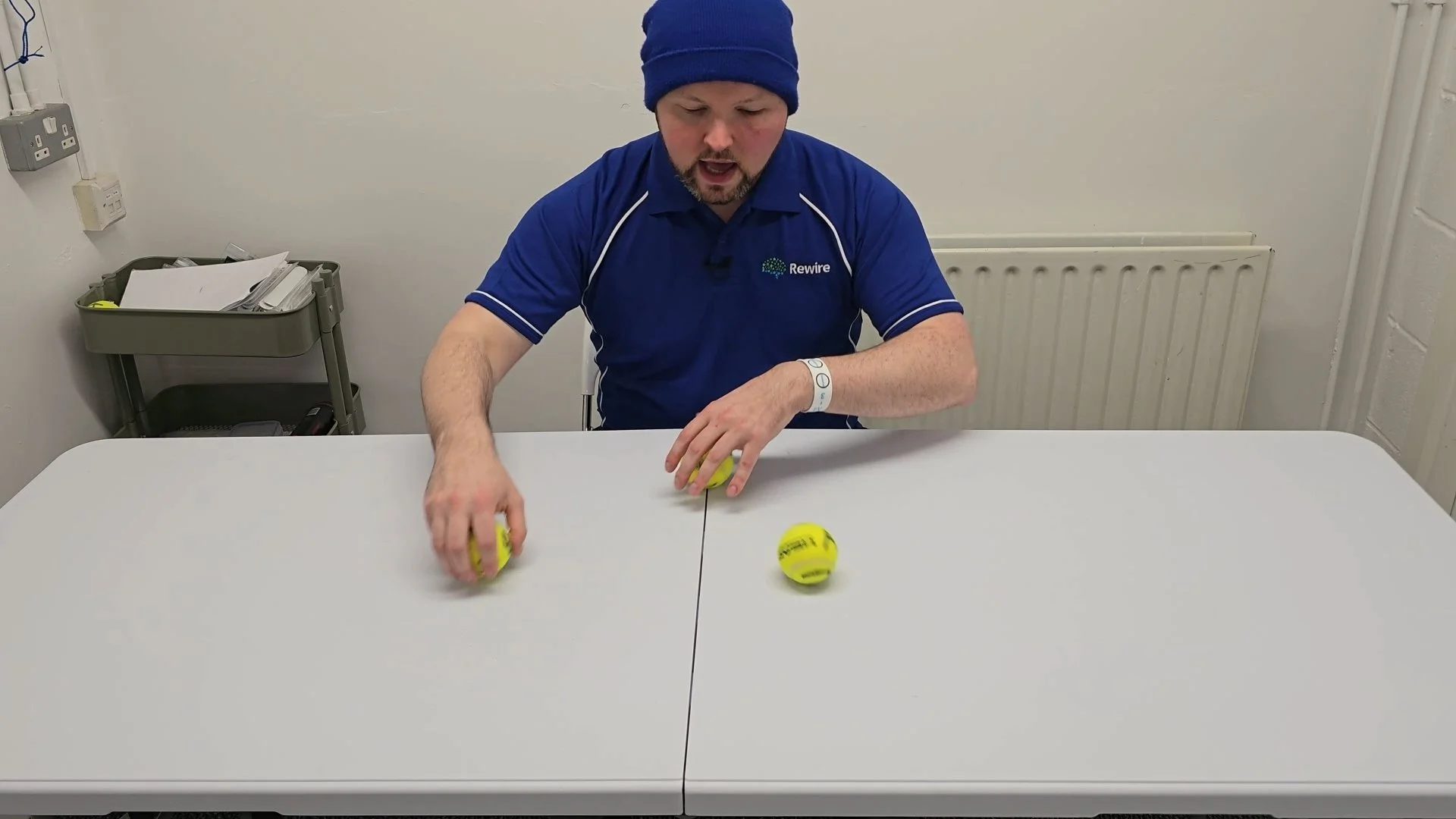
Not all movement or exercise needs to be intense, make you sweat or even make you get out of your chair. Dexterity work and grip strength training are two such examples that happen to be some of the best ways of improving focus. I mentioned already that focus is controlled by the frontal lobe of the brain, and this region also plays a huge role in movement of the hands. There is a principle in neuroscience that nearby regions affect each other, and in this case focus can improve dexterity in the hands just as much as dexterity in the hands can improve focus. This should make sense, as the more precisely we need to move our hands to complete a task, or the stronger the grip we need to have to manipulate an object, the more focus will be required to be successful.
Train Your Balance
Try as you might, it is really hard to maintain your focus when you are stressed. Focus exists in a sweet spot of stress where the task at hand is challenging enough to require attention, but not challenging enough to be overwhelming. As stress levels rise in the body, you will find yourself wanting to switch rapidly between tasks, as the brain tries to make sure that nothing threatening is put out of sight for too long. If we want our focus to improve then, lowering stress levels has probably the biggest potential for success.
What has stress got to do with balance though? When it comes to lowering stress levels, in theory you can tackle things from any starting point. The brain does not see different kinds of stress as different, but instead stress is just added together into a nice big pile, and anything you do to reduce the size of this pile will serve you well. However, when it comes to which things stress the brain out the most, falling over is absolutely a top priority. Balance degrades over time as we get older for a whole host of reasons, and while the brain can pull out the stops to compensate for weakening balance systems, this comes at the price of stress. By training your balance, especially with your eyes closed, you stand to reap huge dividends when it comes to stress reduction.
Isometrics
Isometrics are exercises that involve holding a position with total stillness. Think of a plank, a wall sit or hanging still from a bar. As an exercise isometrics are pretty interesting, because while on the outside it looks like nothing is moving, the inside is an entirely different story. In order to create the illusion of stillness, the muscles on each side of a joint have to provide exactly the right amount of tension to keep things balanced. Over time, muscle fibers start to run out of energy, and this means that the tension is constantly changing. In the same way as intricate work with the hands requires a huge amount of focus and attention from our conscious mind, isometrics require a similar amount of attention from unconscious parts of our brain that operate below our awareness. Training isometrics helps these parts of the brain become more adept at handling complex information before passing it on to our conscious minds.
So there you have it, 4 forms of exercise that can have enormous benefits to your focus. Try not to stress to much over these, if you already have a movement program that you feel works for you I am not suggesting that you ditch everything and start from the beginning. But if you find focus to be an issue and are not sure where to begin, you can’t go to wrong trying one of these out first. If you’d like a deep dive into working with your brain for focus, energy and more, why not take a look at the Rewire Neuro Dynamics online courses?