

Struggling To Focus? Here Are The Exercises That Help
When you think of focus, you probably think about something going on inside your head. You are much less likely to think of it as a physical activity, and even less likely to think that somebody who specialises in movement would have anything useful to say about it. Yet here we are. Focus has been one of my favourite topics of study over the years, as to me it perfectly illustrates the connection between the depths of our mind on the inside and the physical processes linked to them.
Take a moment to think about what happens when you jump into focus. Imagine yourself sitting relaxed in your living room, when all of a sudden you remember you are late for a doctors appointment. Do you simply race through the options in your head, springing physically into action only after you have a gameplan? Not at all, despite that being the most efficient way to do things, most people would find it impossible. Instead you will sit bolt upright while trying to remember the details, with your eyes darting around until you have an idea, then fixating intently on a random object as you work it out. This is the part of the physical process of focus, whose characteristics track from CEOs making difficult decisions to athletes analysing the field of play.
One of the bigger projects I’ve been involved with over the years was with a company called Practical Wisdom, who specialise in providing help & resources to neurodivergent individuals. I had the privilege of being part of a team commissioned by the UK’s National Health Service to provide resources to those waiting for an ADHD assessment, and my job was to give pratical tools for focus. Today I would like to share some of this information with you in the form of the best kinds of exercise you can engage in to boost your focus.

Light Cardio
One of the difficult things about focus, is the amount of energy it requires. Focus is a complex form of thought, that requires quite a lot of blood flow to reach the frontal lobe of the brain. And what better way is there to improve blood flow to the brain? By improving blood flow everywhere! Cardio exercises are a great way to get the blood flowing around the body, and with one slight modification we can make it an ideal exercise for focus as well.
The key to improving focus with cardio is to keep the intensity down. While more blood flow is great, increased stress levels from pushing yourself too hard might cancel out your efforts. A good way to test the intensity of your cardio is to ask yourself when you finish: ‘if I had to, could I do this again right now?’ If the answer is no, you’ve probably gone too hard.
Work With Your Hands
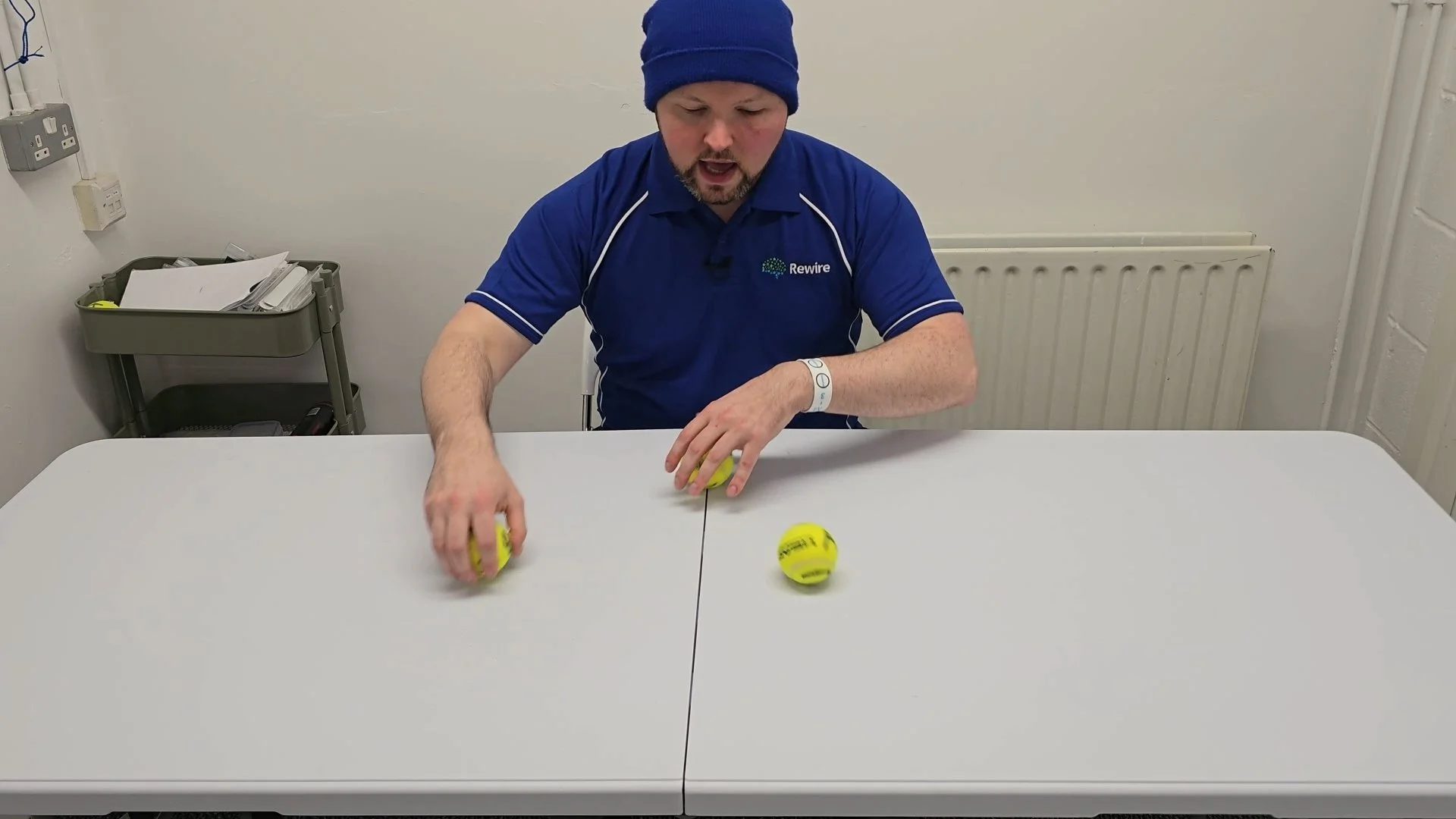
Not all movement or exercise needs to be intense, make you sweat or even make you get out of your chair. Dexterity work and grip strength training are two such examples that happen to be some of the best ways of improving focus. I mentioned already that focus is controlled by the frontal lobe of the brain, and this region also plays a huge role in movement of the hands. There is a principle in neuroscience that nearby regions affect each other, and in this case focus can improve dexterity in the hands just as much as dexterity in the hands can improve focus. This should make sense, as the more precisely we need to move our hands to complete a task, or the stronger the grip we need to have to manipulate an object, the more focus will be required to be successful.
Train Your Balance
Try as you might, it is really hard to maintain your focus when you are stressed. Focus exists in a sweet spot of stress where the task at hand is challenging enough to require attention, but not challenging enough to be overwhelming. As stress levels rise in the body, you will find yourself wanting to switch rapidly between tasks, as the brain tries to make sure that nothing threatening is put out of sight for too long. If we want our focus to improve then, lowering stress levels has probably the biggest potential for success.
What has stress got to do with balance though? When it comes to lowering stress levels, in theory you can tackle things from any starting point. The brain does not see different kinds of stress as different, but instead stress is just added together into a nice big pile, and anything you do to reduce the size of this pile will serve you well. However, when it comes to which things stress the brain out the most, falling over is absolutely a top priority. Balance degrades over time as we get older for a whole host of reasons, and while the brain can pull out the stops to compensate for weakening balance systems, this comes at the price of stress. By training your balance, especially with your eyes closed, you stand to reap huge dividends when it comes to stress reduction.
Isometrics
Isometrics are exercises that involve holding a position with total stillness. Think of a plank, a wall sit or hanging still from a bar. As an exercise isometrics are pretty interesting, because while on the outside it looks like nothing is moving, the inside is an entirely different story. In order to create the illusion of stillness, the muscles on each side of a joint have to provide exactly the right amount of tension to keep things balanced. Over time, muscle fibers start to run out of energy, and this means that the tension is constantly changing. In the same way as intricate work with the hands requires a huge amount of focus and attention from our conscious mind, isometrics require a similar amount of attention from unconscious parts of our brain that operate below our awareness. Training isometrics helps these parts of the brain become more adept at handling complex information before passing it on to our conscious minds.
So there you have it, 4 forms of exercise that can have enormous benefits to your focus. Try not to stress to much over these, if you already have a movement program that you feel works for you I am not suggesting that you ditch everything and start from the beginning. But if you find focus to be an issue and are not sure where to begin, you can’t go to wrong trying one of these out first. If you’d like a deep dive into working with your brain for focus, energy and more, why not take a look at the Rewire Neuro Dynamics online courses?

Don’t Shoulder The Burden Of Shoulder Pain
If my channel analytics alone are anything to go by, a whole lot of you are struggling with shoulder pain. In fact, a deeper dive suggests that shoulder pain is the third most common musculoskeletal injury dealt with by physiotherapists. When the shoulder stops working as we are used to, many everyday tasks can turn into an elongated nightmare, and yet despite all this the options for treatment can be pretty slim.
In my time working with individuals with shoulder pain, I have found that almost every single person who walks through my door (or zoom chat in the case of my international clients) has been given exactly the same set of strengthening exercises to fix the problem. This would be great if it was working, but the fact that these people feel the need to seek out yet another expert suggests that banded pull-aparts and wall snow angels might not be the one-size-fits-all magic pill that some might claim them to be. So today I would like to share with you the most common tricks I have used to help ease shoulder pain.

Isolate The Joints
You may have worked on opening up the strength and range of movement of your shoulder, but have you looked at what else is happening all around it? The muscles connecting the shoulder and scapula to the rest of the arm and trunk are all interconnected with other joints, meaning moving your shoulder with a bent arm is completely different to moving your shoulder with a straight arm. One of the most common things I see from people who have spent a lot of time on shoulder rehab is that while the shoulder itself is moving better, the trunk, neck, elbow and hand are all moving too. If the shoulder depends on assistance from these other joints to move, this will turn out to be a problem if you ever want these joints to do anything other than your rehab exercises. Learning to move the shoulder in isolation of the other joints is a crucial step towards reducing pain and building back strength.
Look To The Neck
Here’s the strange thing about the body. Usually the problem and the solution are found in different areas. When it comes to the shoulder, it’s always a pretty safe bet that the neck will be part of the solution. The reason why boils down to stress. When our stress levels rise, the brain kicks into survival mode. One of the first things it will do is add some tension to the neck, as this protects the skull & brain from any unexpected blows or falls. As we saw in the previous point, muscles are connected, and most of the muscles connected to the neck at one point are connected to the shoulder at the other. So tension in the neck automatically changes the movement of the shoulder, and if we just focus on shoulder rehab we might only aggravate the neck more. And here’s the real kicker: the more we stress about our shoulder injury, the tighter the neck becomes. Instead, start treating your shoulder by first mobilising the neck, and maybe try do destress a bit while you’re at it!
Lymph It Out
Almost everybody has heard of the circulatory system, the series of vessels that pump blood around the body. But not everybody is aware that there is also another set of vessels that exists to flush waste products out of the body. This is known as the lymphatic system, and it consists of a series of vessels combined with a series of checkpoints called ‘nodes,’ where large waste products get broken down. You’ve probably experienced swelling around your neck during an illness or infection. That’s coming from the lymph nodes being overloaded while the white blood cells struggle to break everything down. If the illness lasts long enough you might even notice that this swelling can travel down around the armpits, or that this area may be sensitive to the touch. The neck and shoulders contain a huge amount of lymph nodes, as this is the junction where waste products from the arms, neck and brain all arrive. Anything from illness to a poor diet or lack of sleep can cause a buildup in these nodes, and inflammation and reduced movement comes as a result. For this reason, working on the lymph nodes can often result in an improvement in shoulder pain and movement. If you want to try it out for yourself, stay well hydrated and practice very light rubbing around the neck, pecs and armpit areas. Be sure to test your shoulder range before and after to see some real time effects.
Get Your Lungs Involved
Did you know that almost all of the muscles involved in breathing, also have a role to play in movement? While the diaphragm, the primary muscle for breathing, mostly just inflates the lungs, the rest of them actually treat breathing as a secondary function. Muscles like the pecs, lats & traps are primarily involved in moving the arms, and the other muscles are involved in moving the head and spine as well. That means that if you want to breathe and move your upper body at the same time, there is actually quite a lot of coordination required. This gets worse when we consider that we tend to use the diaphragm less as stress goes up, meaning that this problem has the potential to spiral out of control quite quickly. If you find that you can breathe comfortably at rest but get completely breathless the moment you add some movement, or you find that your shoulder pain gets worse as your heart rate goes up, it might be worth combining some breathwork with your shoulder rehab. This will teach the muscles to coordinate themselves with each other.
Check The Liver Out
This one applies more to shoulder pain on the right side of the body. If you have pain in the right shoulder, or at the back of the right ribs, it may be possible that this pain that has been referred from the liver. Before you start to panic, I should mention that pain coming from the organs is a lot more common than you might think, and not necessarily sign of anything serious. Compare it to the number of headaches you have had that didn’t turn out to be a brain tumor. But if the liver is working hard for whatever reason, much like the lymph nodes we discussed earlier it might just want to create a bit more space for it to function. This inflammation results in the tissues being less able to move, and the brain sends a pain signal to discourage any unnecessary movement from happening in the first place. If you think you can relate to this, try some simple things for taking care of your liver, like cutting down on alcohol or ultra processed foods. If this makes the pain go away, it may be time for a lifestyle rethink. And of course in cases of extreme pain or coupled with any more serious symptoms, it never hurts to get the all clear from a medical professional.
So there you have it, 5 tips to go beyond the classic shoulder rehab drills. I’m more than certain you will get some benefit alone from isolating the shoulder and getting the neck involved, and when you add in the lymph, breathing and liver care you probably will see your quality of life shoot up overall! If you’d like some help working through your shoulder issues, don’t hesitate to book in for a call, or check out the Rewire Neuro Dynamics Grip Strength Course if you would like some tools for tackling the shoulder on your own.
Best of luck!

What’s The Deal With Motion Sickness?
My favourite quote around motion sickness comes from the book Balance, In Search of the Lost Sense by Scott Mcreadie. In the first chapter, introducing us to the idea of the vestibular system, he writes:
“It’s a common adage among experienced sailors that when you’re sick from the sea, first you’re afraid you’re going to die, and later on you’re afraid that you won’t.”
Despite being the most common form of balance issue, motion sickness is no joke. Many people across the world actively avoid certain types of transport in order to avoid the experience of extreme nausea that awaits them. A big part of the dread comes from the nonsensical nature of the experience. We can logically understand why eating something that our stomach didn’t agree with should give us nausea, but not motion. Moving is one of the most natural things that we do, and it feels really strange that it should cause us to suffer in such an unusual way.
Understanding is one of the best things we can do when it comes to improving our relationships with our brain, so today I would like to try to explain the reality behind motion sickness and how we can work against it.
What Causes Motion Sickness?
You may have found it a little strange that I defined motion as a balance disorder, when most of the time we experience it while sitting down on moving transport. It turns out that balance is a lot more complicated than you may have thought. While we might consider balance to be standing on one leg, balance to the brain is simply defined as the art of staying upright, or not falling over. This applies equally whether we are running on a tightwire or sitting on a chair.
In order to balance we must have 3 pieces of information:
What is the current position of all of the joints in my body?
What does the world around me look like?
Which parts of me are currently moving?
This information is delivered to us via our sense, primarily vision, proprioception and vestibular (balance). Usually when we move around, these senses tend to agree with each other. If my vestibular system detects motion, and my muscles confirm that our legs are moving, and our eyes see the world moving around us, we get a pretty strong vote of confidence that we are indeed moving.
But something weird happens when we add transport into the picture. When we sit in a passenger seat of a moving vehicle, our vestibular system will still detect motion, but the other systems will disagree. As far as the body is concerned we are sitting still, and the eyes confirm this by looking around at stationary objects inside the vehicle. When the brain gets presented with conflicting information it has to decide which pieces to believe and which to discard, and in almost every case it chooses the eyes (the dominant sense for humans) as the believable source of information.
So now your vestibular system is being ignored. Not necessarily a problem, the brain ignores loads of information every minute and this should be just a temporary situation. If we have a healthy vestibular system that is functioning well, this is where the problem ends. Think of it as confidence, if somebody tells you they don’t believe you when you know you are correct, it doesn’t cause you anxiety. However if our vestibular system is not functioning at it’s best. the news that it is being ignored sparks what I can only describe as the brain’s version of imposter syndrome. To the vestibular system, it is equally likely that the information is correct but not useful, or incorrect and dangerous. This causes panic, and as this panic rises it gives rise to motion sickness.
Ok Great, But Why Nausea?
The follow up question I always get asked when talking about motion sickness is: ‘Ok, the sensory disagreement makes sense, but why would it cause nausea?’ This is pretty fair since nausea comes from the stomach, not an organ we traditionally associate with movement. The answer again might be surprising; your brain thinks it has been poisoned.
This one will take a bit of unpacking. There is a saying in neuroscience that neurons that wire together, fire together. Basically it means that parts of the brain that live next to each other usually influence each other. And as it happens, the nerve that connects balance to the brain (the vestibularcochlear nerve) is sitting right next to the nerve that connects digestion to the brain (the vagus nerve). This makes sense, as when we are exercising intensely or running from danger, the brain will switch off the digestive system in order to focus on survival. The relationship works the other way too, when the digestive system becomes completely overwhelmed, usually due to some unwelcome substance in the stomach, it can trigger dizziness in the vestibular system in order to stop us from moving around too much.
In the case of motion sickness then, the panic experienced by the vestibular system cannot be justified to the brain as a movement issue, as all systems involved in movement seem to be functioning correctly. The brain then makes the assumption that the vestibular system could be being triggered by the vagus nerve. Despite no signal coming from the stomach to confirm this, the consequences of being wrong are severe and the brain would rather not take that chance. It makes the asusmption that the signals from the vestibular system are coming from the vagus nerve, and sends the appropriate signal of nausea to deal with it.
So What Can We Do?
There are a few things that can be helpful when it comes to motion sickness. First and foremost, it is a good idea to try and sync your senses back up as much as possible. Focusing your eyes outside the vehicle will help the brain see that the motion detected by the vestibular system is genuine.
In terms of long term benefits, the best thing to do is to strengthen the vestibular system, as well as improving its communication with the eyes and the body. If you are interested in a tool that can do just that, I would recommend checking out the Neuroband, a wearable vision & balance training tool that helps to challenge & integrate the eyes, body and inner ear so they perform as a cohesive unit.

4 Principles About Pain That You Need To Understand
Time For A Change
The year 2020 is remembered pretty negatively by pretty much everybody who went through it, but for the world of pain science a major step forwards was taken. The IASP (International Association for the Study of Pain) updated its definition of pain from
“An unpleasant sensory and emotional experience associated with actual or potential tissue damage.”
to
“An unpleasant sensory and emotional experience associated with, or resembling that associated with, actual or potential tissue damage.”
Wild stuff I know, and you may have had to read it a few times to even understand how the second one is even different, but when it comes to improving the treatment of pain, those 5 extra words go a long way to explaining some of the more unusual ways that the mind and body link together when it comes to the experience of pain.
Since the 1600s, we have assumed that pain comes from the body, and that the experience is one of a problem to be solved. For the most part, this served us well, as pain does indeed tend to show up when we have a physical problem that requires our attention. But over the centuries it has also become clear that this is not the whole story. There are many cases where the body experiences pain yet no professional can find the root cause, could it be that the root cause may be more psychological than physical? Or is it possible that our understanding of pain is just a little off?
This update to the definition of pain is the first time that pain is a huge step towards shifting our views on pain as something happening in the body towards something that originates in the brain, and today I would like to share 4 principles about pain that you may not be aware of, and might just change your relationship with both pain, and your brain.
Pain is an alarm, not a sensor.
Imagine a large building with a fire detection system. In each room is a sensor that detects smoke, as well as an alarm consisting of a bell and flashing light. These sensors and alarms are not linked together as a unit, but instead all sensors and alarms are connected together via a central computer. When the sensor detects smoke, the computer triggers the alarms in order to get the occupants attention and evacuate the building. So the sensor and alarm both depend on each other, but they both have different functions. If a sensor is broken, the computer will not get the correct data about smoke, but the alarm can still be triggered manually if the building manager can get this information in another way, or even if the building needs evacuated for a different reason.
The philosopher Rene Descartes was the first person to suggest a scientific theory of pain, linking pain in the body to processing in the brain. The idea was that signal for pain was passed from the site of injury up to the brain, which was where we would ‘feel’ the experience. This theory treats pain like the sensor detecting smoke, but in reality pain looks more like the fire alarm. When the sensors, or nerves, in the body detect a problem, they send this information to the brain. The brain takes this information and combines it with all the other information it has received, and then makes a decision on whether or not the alarm, or pain, is the best response.
This might sound like overkill, but when it comes to survival there is a good reason why the alarm should be separate from the sensor. Imagine you were to injure yourself crossing a busy street, it is better if your brain can choose not to send pain if pain might lead you to further danger. Similarly, if you are about to do something likely to cause danger, your brain may choose to send pain in advance, in order to prevent the bad thing from happening at all.
So what does this teach us about pain overall? Pain is the alarm, not the sensor, and like an alarm, pain is the signal to get our attention, not the details of the problem to be solved.
2. Pain is both a sensation, AND an emotion.
Hot and cold? Which one is good and which one is bad? If you’re from Ireland you might have a pretty clear answer on this, but most people will tell you it depends on the context. An ice cold bucket of water poured over your head in the summer might feel pretty refreshing, but in the winter would not be welcome at all. The temperature of the water is the same both times, but how we feel about it is different. On the inside of the body, the brain divides temperature up in the same way. There is a sensory component that focuses on the details, and an emotional component that focuses on the context of the situation. Temperature is therefore both a sensation and an emotion at the same time, and when we realise this we can greatly improve our tolerance for extreme temperatures by focusing on the sensation and reframing the emotion.
Pain turns out to be really similar to temperature. So much so that pain can sometimes be blended with temperature in the body. And the emotional component is no exception. When we are experiencing pain we are experiencing a sensation at a certain point in our body, but also at the same time we have an emotional response. And when it comes to intensity, the emotional side of pain is usually the one to crank things up.
When you think about it this makes sense. If you eat something spicy on purpose you will probably enjoy the experience much more compared to if you ate something spicy when you didn’t expect it. The brain’s emotional centres go into overdrive when they are caught off guard, and this means they will try much harder to change your behaviour by giving you negative emotions. Similarly, you may find your pain experience of your broken arm is much different when you think about how you can’t play guitar versus thinking about how much time you’re getting off work.
We might not be able to do a whole lot about the sensory part of pain, but we can absolutely work on reframing our emotions. Slowly but surely, this can change the overall quality of the pain experience.
3. Pain is unique to everybody.
Did you ever hurt yourself so badly as a kid you started to panic that you had broken a bone? But then you took it to your parents who informed you that it couldn’t be broken, because it would hurt more if it was. There is a pretty common idea that bigger injuries hurt more, and that pain is something that can be measured on a universal scale. Both of these ideas are completely incorrect.
We’ve already looked at the idea that the brain can switch pain on and off when it feels the circumstances are appropriate, and that our emotions can distort our perception of pain. So it should be starting to make sense, that since everybody is dealing with different circumstances, and everybody is in a different place when it comes to emotional and psychological profiles, that everybody is going to experience pain differently based on their life experience up to that point.
As well as circumstance & emotion, there are several other factors that will influence how we experience pain. Our genetics will determine factors like the size and spread of the nerves around our body. Our stress levels will determine how intense a stimulus must be before it sends a signal to the brain, and our past experiences shape our neural pathways, making some sensations more or less familiar than others. All of these things influence the exact experience we go through when it comes to pain, and as such it is impossible to say that something that is 5/10 on the pain scale for me, will be the same for you. Not only that, our experience changes day to day, so we can’t even say that a 5/10 for me now will still be a 5/10 later on.
It takes quite a while for research to turn into practice, and some of you will have had the experience only recently of a medical professional proclaiming that you could not possibly be in the amount of pain you claim to be in, based on their years of experience. While this thinking may take time to shift, it is absolutely on the way out, and the science no longer supports the idea that the sensation of pain can be measured by anyone other than the one experiencing it.
4. Pain is a decision, decisions waste energy.
What’s the best way to become more efficient? If you believe the self help books, the answer is automation. Every time we need to make a decision on how to act, we waste valuable time, and even worse, we use up valuable stores of willpower. If we can automate this process so the decision happens automatically, we free up resources to focus on other things. From CEOs kitting their wardrobe with sets of the same outfit, to the tech industry churning out AI bots for every task imaginable, we seem to value automation over everything, even if making a decision would lead to a better result.
The desire for automation is not a new concept, in fact it is completely hardwired into our brains. Our brain is constantly trying to automate every aspect of living, and when it does this successfully we call it a habit. Habit forming is crucial for our unconscious mind, as it the best way to save energy, and thus improve our chance of long term survival. Any time the brain finds itself making the same decision several times over, it turns the process into a habit, regardless of whether the outcome is good or bad.
That’s where pain comes in. If you lift your arm overhead and it hurts every time, the brain eventually realises it can just automate the pain response. Instead of weighing up the circumstances, like tissue damage and potential danger, the brain switches on a pain auto response to fire every single time the arm gets ready to lift. Over time, the physical issues may have resolved themselves, but since you survived the ordeal, the brain sees no issue with continuing to fire the pain response automatically. It is saving energy after all, and it makes you much less likely to repeat the action that injured your shoulder in the first place.
When we are dealing with a chronic pain complaint, the problem is usually less about fixing or strengthening the joint, and more about relearning to move without these habitual pain responses.

What Now?
One of the more interesting things about research into pain is that just understanding the process better can go a long way to reducing pain symptoms and making movement more manageable overall. If you would like to explore these concepts in a practical way, get yourself booked in for a consultation, to explore the possibilities of pain free movement.